Edit a project
Editing a Project in DPMS
The Edit a Project screen is the central command centre for every compliance initiative tracked in DPMS. Whether you are a DPO adjusting a risk profile after a new assessment, a project manager reorganising the task hierarchy, or a compliance officer linking an ISO standard to a new initiative, this is where all changes are made. The screen brings together everything that belongs to a project — its metadata, budget, team roles, assessments, meetings, and a full risk evaluation workflow — under one set of tabs. Understanding how to navigate it efficiently will save you significant time and give you confidence that every part of your project record is accurate and up to date.
How to open it
You can reach the Edit screen in several ways:
- Go to Projects in the left-hand sidebar.
- Click any project row to open its detail view.
- Click the pencil (edit) icon on any section of the detail view, or select Edit from the three-dot options menu. DPMS will take you directly to the relevant tab for that section.
- Alternatively, click a workflow task or notification that requests an update — it will deep-link you straight to the specific tab that needs attention.
Permission note: You need at least a read permission on Projects to open this screen. Making changes on the General, Cost & Impact, Steps & Progress, People, or RASCI tabs requires an edit or create permission on Projects. The Trigger Workflow tab is controlled by a separate workflow assignment permission. If you do not hold the appropriate permission, the screen will show a Forbidden page.
What you see
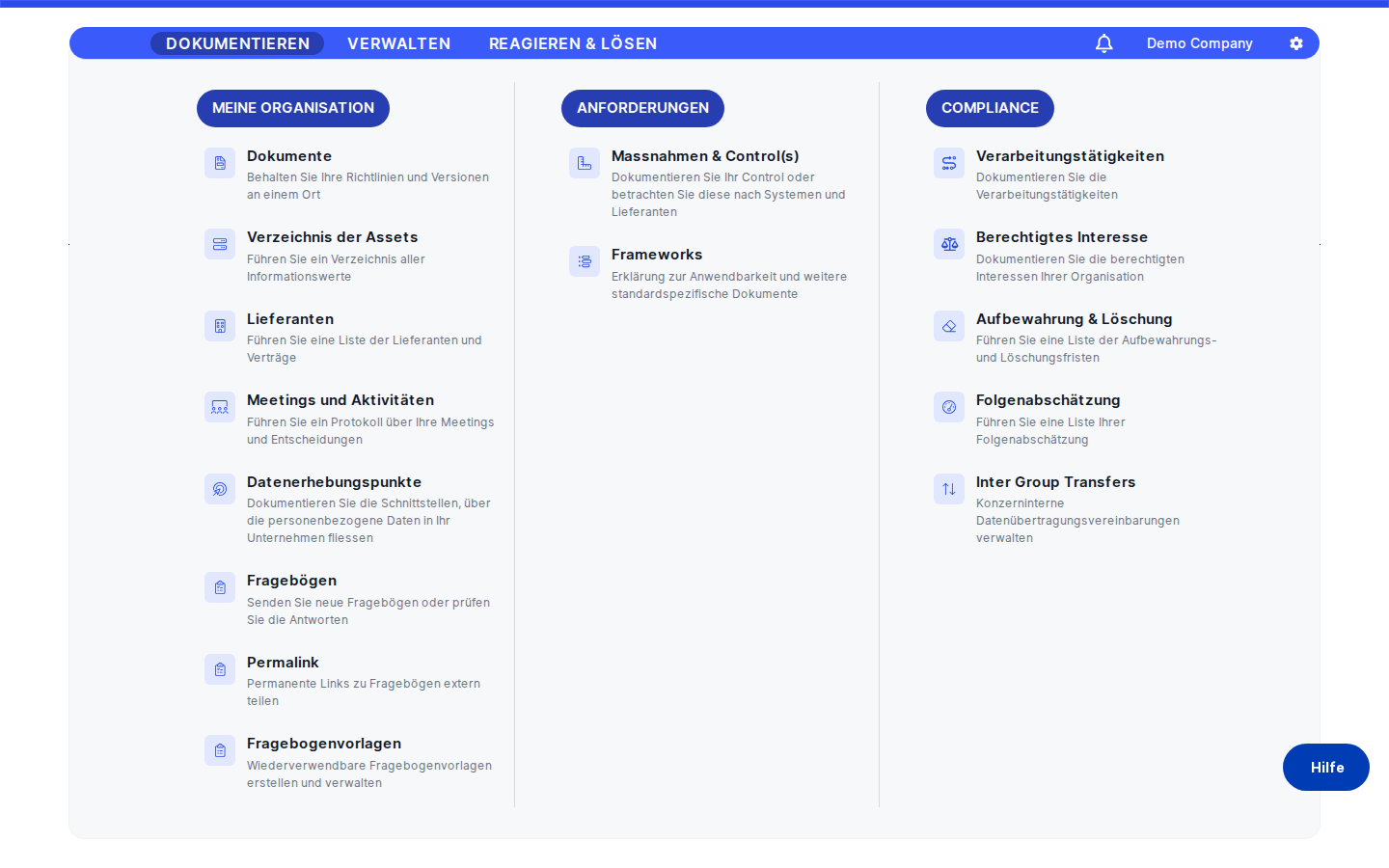
At the very top of the screen is a back arrow that returns you to the project's detail view. Next to it is the page title, which shows "Projects" for a normal edit, or a composite title such as "Projects — Workflow name — Tab label" when you have arrived via a workflow task, so you always know your context.
Down the left-hand side runs a vertical tab menu. This is the primary way to move between sections of the project. The currently active tab is highlighted in blue. If you are creating a brand-new project that has not been saved yet, all tabs except General will appear locked — you must save the General tab first to unlock the rest.
The right-hand content area changes completely depending on which tab is selected. Each tab displays a white card containing a form or a table. Most form tabs show a thin blue vertical bar on the left edge of each input group — a visual guide that groups related fields together. At the bottom of most tabs there is a Save button. A few read-only tabs (such as View Treatment Plan) do not show a Save button.
On the risk-related tabs (Standards, Threshold, Risk Scenarios, Implemented TOMs, Determine Current Risk, Suggested TOMs, Treatment Plan, View Treatment Plan), a blue contextual information bar appears above the form showing the active risk standard name and the project name, so you always know which risk framework context you are editing within.
Working with this screen
Creating a new project from scratch
When you click Create from the Projects list, the edit form opens with no project ID. Only the General tab is unlocked; all other tabs are greyed out and cannot be accessed until you complete this first step.
- On the General tab, use the action bar at the top to set the project Status (e.g. Active, Draft), Priority (Low, Medium, High, Critical), and one or more Responsible Persons.
- Fill in the Name field — this is the project's display name across all of DPMS. If your organisation uses multiple languages, click the translation button next to the field to auto-translate the name.
- Select one or more Classification tags, a Domain (e.g. "Legal", "HR"), and any Applicable Regulations (e.g. GDPR, CCPA) using the searchable dropdown. These fields appear on the project's detail view and help other modules filter content by regulation.
- Add a Description, and fill in any of the optional narrative fields (Benefits, Assumptions, Deliverables, Resource, Involvement, Tangible Ambition) that are relevant.
- Click
Save. DPMS sends the project to the server, assigns it a database ID, and redirects you to the project's detail view. You can now return to the edit form and all tabs will be unlocked.
Heads up: All tabs except General are locked until the project is saved at least once. This is by design — linked elements, risk standards, and RASCI data require a project ID to exist before they can be attached.
Setting the budget and risk profile
Once the project is saved, navigate to the Cost & Impact tab to record the financial and risk dimensions of the project.
- Use the Cost Level dropdown to give a qualitative severity rating to the project's financial cost (Low, Medium, High, or Critical). The default is Medium.
- Enter a numeric figure in the Estimated Cost field. The currency symbol shown in the placeholder comes from your organisation's risk settings (for example, "EUR 0,00"). Note that this field uses European number formatting — a dot (
.) is the thousands separator and a comma (,) is the decimal separator, so one thousand euros and fifty cents is entered as1.000,50. - Under Current Risk, select a Likelihood value (how probable it is that the risk will materialise) and an Impact value (how damaging it would be). Reference tables below each dropdown show the threshold values and monetary damage ranges defined in your Risk Settings — use these to calibrate your selection.
- Under Target Risk, select the Likelihood and Impact values that represent the desired state after mitigation measures are in place.
- Click
Save. DPMS automatically calculates the Current Risk Rating and Target Risk Rating from your selections. You cannot enter these rating values directly — they are derived automatically from the Likelihood and Impact combination. These ratings feed into the risk score displays on the Projects list.
Organising tasks and setting the project timeline
The Steps & Progress tab lets you set the project's end date and arrange linked tasks into a meaningful hierarchy.
- The Project Start date is displayed but cannot be edited here — it is derived from the project's task data. Do not be surprised if the date picker appears but refuses to accept input.
- Use the Planned Project End date picker to set the project's deadline.
- If this project repeats on a schedule, turn on the Recurring Project toggle.
- In the Project Steps area you will see all tasks currently linked to the project displayed as draggable cards. Drag a card up or down to reorder the steps. Drag a card onto another card to make it a subtask (it will appear indented under the parent). To promote a subtask back to a top-level step, drag it away from its parent.
- Click
Save. The new hierarchy and date are saved. The progress bar visible on the project's detail view is calculated from this task hierarchy — tasks must have a non-zero workload value to contribute to the percentage calculation.
Tip: Only tasks that already appear in the linked-tasks table will show here. If you need to link new tasks, go to the Tasks tab first.
Assigning people to roles and completing the RASCI matrix
Before you can assign anyone, you need project roles defined. If no roles exist yet, the People tab will show a yellow warning banner with a Create project roles button.
- Click
Create project rolesto go to Compliance Settings and define your roles (for example, "DPO Lead", "IT Representative", "Legal Counsel"). DPMS will remember your current project URL so it can return you here automatically. - Once roles exist, the People tab shows a table with a Role column and an Assignees column. Use the multi-select dropdown in each row to assign one or more users to each role.
- Click
Save. - Navigate to the RASCI tab. Only roles that have at least one assignee show up as rows. If the table appears empty, return to the People tab and ensure users have been assigned.
- Read the legend at the top: R = Responsible, A = Accountable, S = Support, C = Consulted, I = Informed.
- Click
+ Addto create a new column for a RASCI activity (for example, "Policy Review" or "Data Audit"). Type the column header name in the input that appears. If the+ Addbutton does nothing when you click it, check whether you have an existing column whose header name is still empty — you must fill it in before adding another. - For each role row, use the dropdown in each cell to select the appropriate RASCI value(s).
- To remove a column, click the × icon on the column header.
- Click
Save.
Linking assessments, tasks, and meetings
The Tasks, Assessments, and Meetings & Activities tabs each display a linked-objects table that works in the same way:
- Click the link or add button within the table to search for and select existing DPMS records to associate with this project.
- To remove a link, use the unlink or remove control on the relevant row.
- Click
Saveon the tab to confirm the changes. DPMS updates the project's linked records without affecting the linked objects themselves.
When you link an assessment that has risk evaluation data, DPMS may show a pop-up asking whether to update the project's risk based on the assessment's risk evaluation results. Confirming this will trigger an automatic recalculation of the project's standards data.
Running a full risk evaluation
The risk evaluation tabs — Standards, Threshold, Risk Scenarios, Implemented TOMs, Determine Current Risk, Suggested TOMs, and Treatment Plan — form a sequential workflow. You must work through them in order:
- Standards tab: Link one or more risk frameworks (for example, ISO 27001, GDPR) to this project. Without a linked standard, all subsequent risk tabs will be empty.
- Threshold tab: Set the acceptable risk level for this project under the chosen standard.
- Risk Scenarios tab: Associate specific risk scenarios with the project.
- Implemented TOMs tab: For each risk scenario, link the technical and organisational measures that are already in place.
- Determine Current Risk tab: Record the current risk level for each scenario, taking into account the implemented TOMs. A live risk bar updates as you make selections.
- Suggested TOMs tab: Review system-suggested measures and select those you intend to include in the treatment plan.
- Treatment Plan tab: Draft your treatment plan and, when ready, publish it using the finalise option. Once published, you can view the finalised plan on the View Treatment Plan tab.
The contextual information bar above each of these tabs always shows you the active standard name and the project name, so you know exactly which framework context your edits apply to.
If you want to copy a risk standard configuration from another element (for example, reusing a setup from a related project), use the Copy Element tab.
Triggering a workflow
Once a project is ready for a formal review or approval process, go to the Trigger Workflow tab. This tab is only visible if you have been granted workflow assignment access. Select the workflow template you want to apply and confirm. Once triggered, the Overview tab becomes the place where participants can respond to workflow steps without leaving the project context.
Controlling who can see and edit the project
The Manage Access tab lets you grant or restrict access to specific users or groups beyond the default permissions set by your organisation's role configuration. After saving, DPMS returns you to the project's detail view.
Field reference
Name — The project's display name, stored in multiple languages. Required in practice — a project without a name is not useful. Use the translation button to auto-translate into other configured languages.
Classification — One or more classification tags from your Compliance Settings. Helps categorise the project across reporting views.
Domain — A single domain tag (e.g. "HR", "IT", "Legal") that indicates the subject area of the project.
Description — Free-text summary of the project's purpose and scope. Displayed with rich-text formatting on the detail view.
Applicable Regulations — One or more regulations (e.g. GDPR, CCPA) this project addresses. Searchable by keyword. These appear on the detail view and may be referenced by other DPMS modules.
Workstream — One or more workstream tags indicating the strategic stream this project belongs to.
Benefits / Assumptions / Deliverables / Resource / Involvement / Tangible Ambition — Optional narrative fields for documenting planning context, expected outputs, stakeholder engagement, and measurable goals.
Cost Level — Qualitative severity rating for the financial cost (Low / Medium / High / Critical). Defaults to Medium.
Estimated Cost — Numeric monetary estimate. Uses European formatting (dot as thousands separator, comma as decimal). The currency symbol comes from Risk Settings.
Current Likelihood / Current Impact — Used to calculate the Current Risk Rating automatically. Reference tables alongside each selector show the threshold definitions from Risk Settings.
Target Likelihood / Target Impact — Used to calculate the Target Risk Rating. Represents the desired risk state after mitigations.
Recurring Project — Toggle that marks the project as repeating on a schedule.
Planned Project End — The project's deadline date. Editable on the Steps & Progress tab.
Project Start — Displayed on the Steps & Progress tab but cannot be edited there. It is derived from task data.
How this connects to the rest of DPMS
The Edit a Project screen sits at the centre of several important data flows:
- Detail view: Clicking the edit icon on any section of the project's detail view deep-links directly to the corresponding tab here. After saving, you are returned to the detail view.
- Projects list: The
currentRiskRatingandtargetRiskRatingvalues you set on the Cost & Impact tab are shown in the risk score column on the Projects list. - Risk evaluation views: The Threshold, Risk Scenarios, Implemented TOMs, and Treatment Plan detail tabs are only populated if a standard has been linked here on the Standards tab.
- Workflow features: The workflow overview features in the detail view (required-action prompts, workflow sub-tabs) only activate after a workflow has been triggered from the Trigger Workflow tab here.
- Progress bar: The task hierarchy you arrange on the Steps & Progress tab directly drives the progress bar shown on the project's detail view. Only tasks with a non-zero workload contribute to the percentage.
- Applicable Regulations: Regulations linked here appear on the General section of the detail view and may be used by other DPMS modules to filter regulation-specific content.
- Task detail views: Each task card in the drag-and-drop area on the Steps & Progress tab links to that task's own detail view, making it easy to navigate to a specific task without leaving the project context.
After finishing your edits, we recommend reviewing the project's detail view to confirm all sections are displaying the updated information correctly, and — if a risk standard is linked — checking the Threshold and Risk Scenarios tabs to ensure the risk evaluation chain is complete.
Tips & common pitfalls
Heads up: All tabs except General are locked until the project is saved for the first time. If you open a brand-new project and cannot click any other tab, save the General tab first.
Tip: The Project Start date on the Steps & Progress tab looks editable because it shows a date picker, but the control is intentionally disabled. The start date is derived from task data. If you need to influence the start date, update the relevant task's start date instead.
- RASCI rows only show roles that have assignees. If the RASCI tab appears empty, the People tab has not yet been saved with users assigned to roles. Complete the People tab and save it first, then return to RASCI.
- The
+ Addbutton in RASCI is silently disabled when a blank column exists. If clicking+ Adddoes nothing, look for an existing column header that is still empty. Fill it in before trying to add another column. - Currency formatting uses European conventions. The Estimated Cost field uses a dot as the thousands separator and a comma as the decimal separator. The value
1.234,56means one thousand two hundred and thirty-four euros and fifty-six cents. - Risk ratings are calculated automatically. You cannot type a Current Risk Rating or Target Risk Rating directly into a field. DPMS derives them automatically from your Likelihood and Impact selections when you click
Saveon the Cost & Impact tab. - The Trigger Workflow tab requires a separate permission. Users with full project edit access may still see a Forbidden page on the Trigger Workflow tab if they have not been granted workflow assignment access. Contact your system administrator if you need this tab.
- Linking an assessment may prompt a risk recalculation. When you link an assessment on the Assessments tab and the assessment contains risk evaluation data, a pop-up will ask whether to update the project's risk from the assessment. Read this prompt carefully before confirming — it will overwrite the project's current standards data.